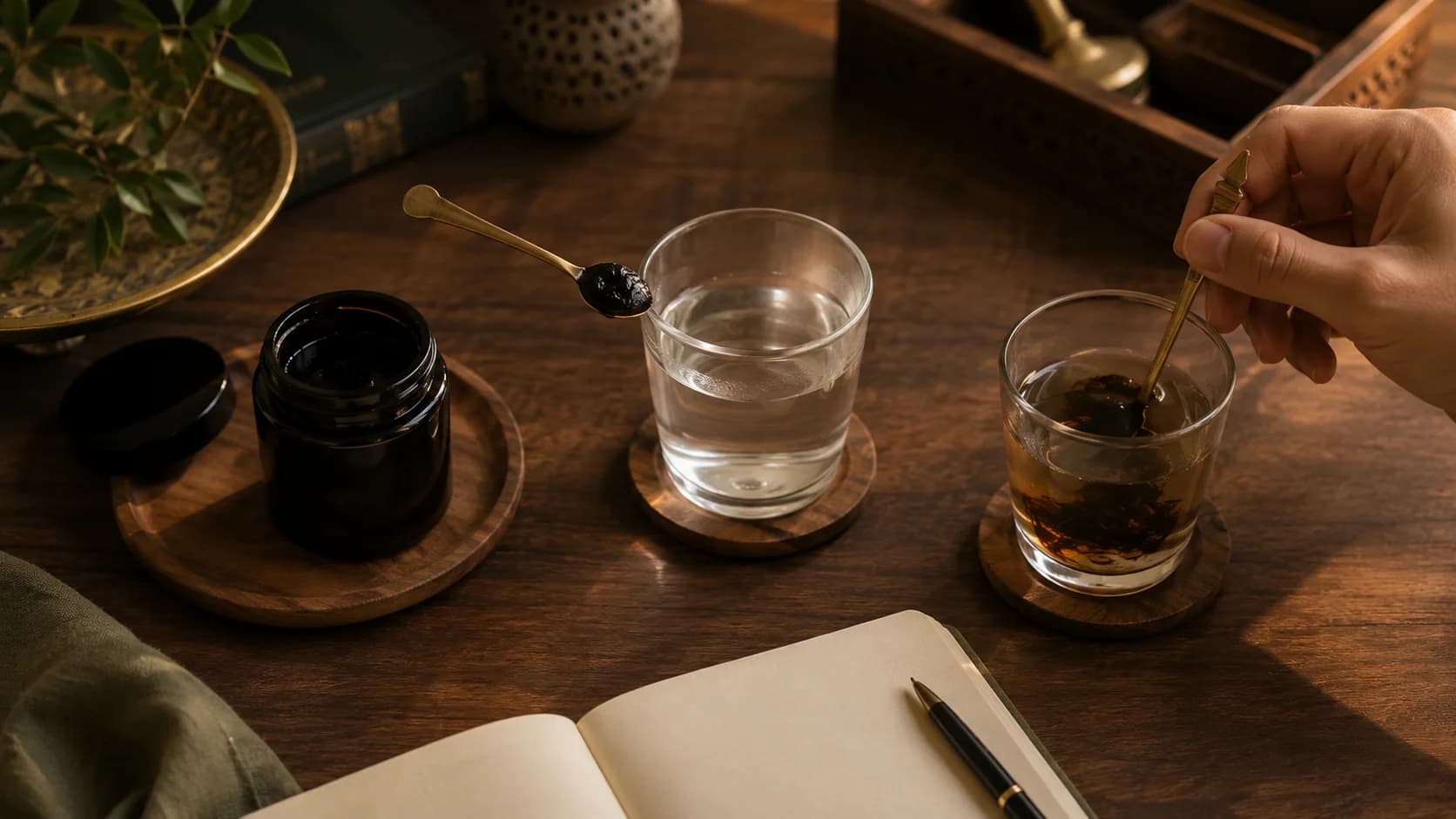
Read the jar before measuring
Check the ingredient, serving amount, frequency, preparation method, warnings and storage directions. If the serving information is missing or unclear, contact the seller before use.
Do not treat a pea-size, rice-grain-size or spoon description from social media as a universal dose. Visual size comparisons are imprecise.
- Serving amount
- Frequency
- Suitable liquid or food
- Maximum labelled use
- Warnings and storage
Mix the resin as directed
Many people dissolve resin in a warm drink, but the label should state the recommended preparation. Use a clean cup and a clean, dry tool.
Do not add more product because the taste seems mild or because someone else uses a larger amount. The relevant amount is the one stated for the exact product.
Choose timing around your routine
There is no universally best time to take Shilajit. Tolerance, food intake, sleep, medicines and professional advice may matter more than morning-versus-evening rules.
Use it consistently only when the label permits and you tolerate it. Stop and seek advice if you develop a concerning reaction.
Store the jar carefully
Close the jar after every use and keep it in the conditions stated on the label. Avoid introducing water, food or a wet utensil into the container.
Temperature can change resin texture. A firmer or softer texture by itself does not prove spoilage or authenticity.
- Keep the lid secure
- Use a clean, dry tool
- Protect from heat, moisture and contamination
- Check the printed date and seal
- Contact the seller if the product changes unexpectedly
Do not copy another brand's serving amount
A common search result gives one universal number in milligrams, but resin products can differ in concentration, serving tools and labelling. The safer approach is to use the amount and frequency printed on the exact product you purchased.
If the label is missing, unreadable or gives contradictory directions, contact the responsible seller before use. Guessing from a pea-sized portion, spoon tip or another brand's scoop makes the measurement less reliable.
Make handling part of the routine
Resin is sticky and can be exposed to moisture each time the jar is opened. Use a clean, dry tool, measure away from steam or splashing water, and close the lid promptly.
If your routine involves warm water, milk, tea or coffee, measure the resin first and keep the wet cup and spoon away from the storage jar. Mixing behaviour is useful for preparation but should not be treated as an authenticity test.
- Read the exact jar before the first use
- Keep the serving tool clean and dry
- Do not return a wet spoon to the jar
- Close the lid immediately after measuring
- Store according to the printed instructions
Common questions
Frequently asked questions
Should Shilajit be taken with water or milk?
Use the preparation method stated on your product. A warm drink is common, but the exact instructions should come from the jar you purchased.
What is the best time to take Shilajit?
There is no universal best time. Follow the label and consider tolerance, meals, sleep and professional advice.
How much Shilajit should I take?
Use only the amount printed on the exact product. Do not copy another brand's serving size or rely on visual estimates alone.
Can I take the same amount as a friend or another brand recommends?
Do not assume so. Use the directions on your own product and seek professional advice when personal health circumstances make suitability uncertain.
What if my resin becomes harder in cool weather?
Temperature can change resin texture. Check the printed date, seal, smell, visible condition and storage history rather than using hardness alone as a spoilage test.
Evidence and regulation
Sources used for this guide
These sources provide regulatory, safety and quality context. They do not certify a specific product unless the source explicitly identifies it.
- Dietary Supplements: What You Need to KnowNIH Office of Dietary SupplementsConsumer guidance on supplement evidence, quality, interactions and safety.
- Botanical Dietary Supplements: Background InformationNIH Office of Dietary SupplementsOfficial background on botanical identity, standardisation, evidence and quality differences.
- Alternative Medicines and Health Products — Product CategoriesDrug Regulatory Authority of PakistanOfficial description of herbal and health-product categories in Pakistan.