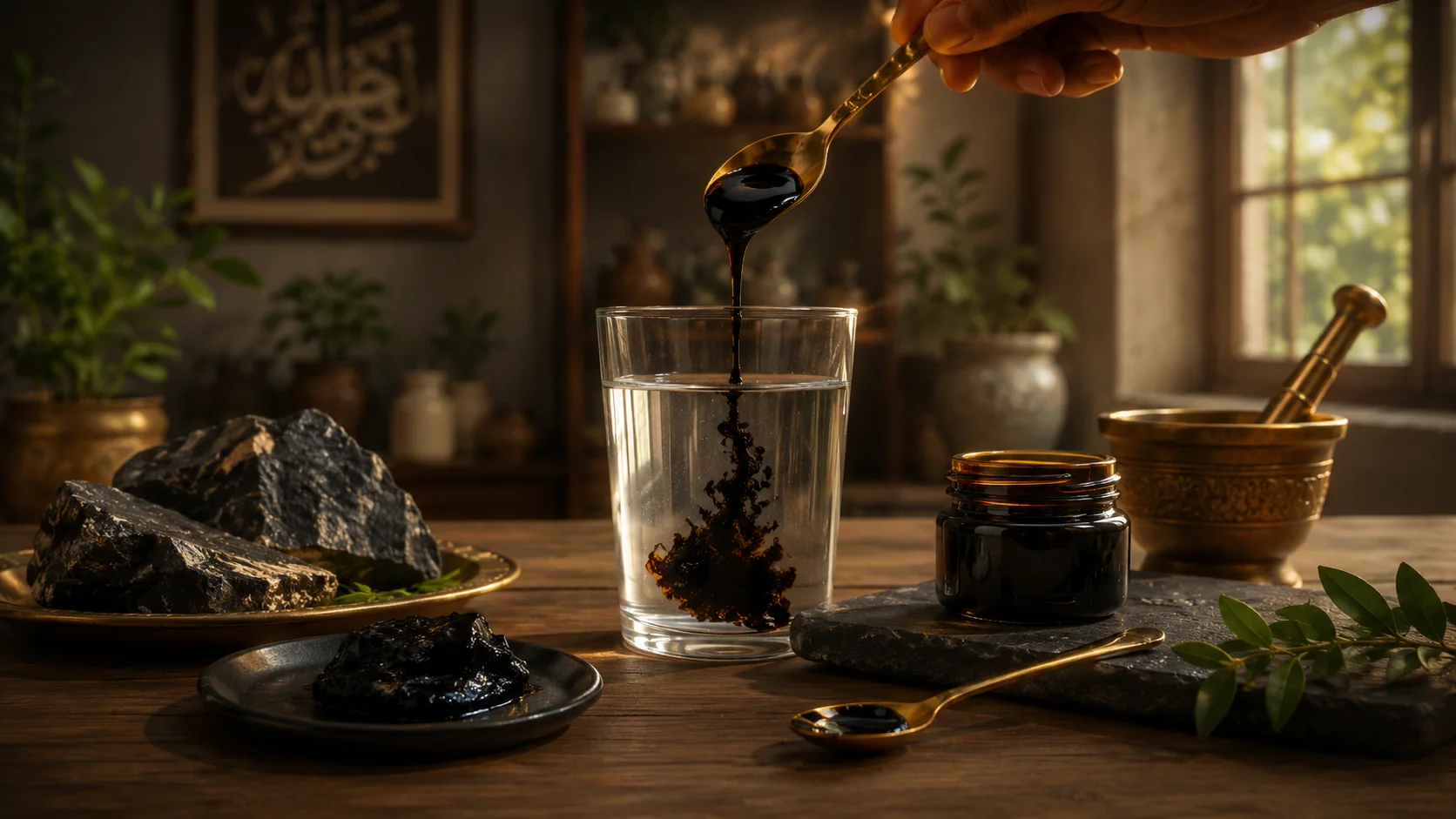
Start with the exact product
Resin, powder, capsules, gummies and liquid drops are different commercial formats. Compare products only after confirming the ingredient list, net amount, serving directions and storage requirements.
A familiar word such as pure, premium, Himalayan or original is not a measurable quality grade. The label and supporting records should explain what is actually in the container.
- Product name and format
- Complete ingredient list
- Net weight or quantity
- Responsible seller or packer
- Use and storage directions
Check traceability and relevant testing
The lot code and dates on the jar should be readable. When a laboratory report is supplied, the sample or lot identifier should connect the document to the product being sold.
Read the report scope carefully. A metals panel, for example, does not establish every possible contaminant, clinical effectiveness or the quality of a different lot.
- Matching lot or sample identifier
- Laboratory name and report date
- Named tests, units and results
- Reference limits or specifications
- Clear statement of what was not tested
Compare price on equal terms
Shilajit prices in Pakistan vary by format, pack size, sourcing, processing, packaging, testing and seller overhead. Compare the price per gram and the evidence attached to the exact product rather than relying on discount percentages.
A very low price can reflect a smaller amount, a different format or weaker traceability. A high price is not proof of better quality unless the seller can explain the difference with verifiable product information.
Avoid unreliable shortcuts
Water, burn, stretch, smell, freezer and thumb tests can describe behaviour, but they cannot identify every adulterant or contaminant. They should not replace a complete label, traceability and appropriate analysis.
Be cautious when a seller promises guaranteed testosterone, fertility, sexual performance, diabetes control, pain relief or a cure. Traditional use does not make every medical claim accurate.
- No guaranteed medical outcomes
- No pressure based on permanent discounts
- No single home test presented as proof
- No certificate that cannot be linked to the product
Use a five-part buying scorecard
A practical comparison becomes easier when every seller is judged on the same five questions: what exactly is the material, what is in the pack, can the lot be traced, what testing is actually relevant, and are the claims responsible? This prevents one impressive-looking certificate or one dramatic origin story from dominating the decision.
For each product, write down the format, net weight, ingredient declaration, lot code, date information, seller identity and the scope of any report. If one of those basics is missing, treat that as missing evidence rather than filling the gap with assumptions.
- Identity: what material and format are being sold?
- Pack: what net amount and ingredients are declared?
- Traceability: can the jar be connected to a lot or batch?
- Evidence: what did the laboratory actually test?
- Claims: does the seller avoid guaranteed medical outcomes?
Match the page you are reading to your real search intent
Someone searching for the best Shilajit in Pakistan may actually be trying to solve one of several different problems: compare current prices, identify fake-looking listings, understand resin versus capsules, verify a laboratory report, or find out how a jar should be stored. The best answer is therefore not one universal brand ranking.
Use a buying guide for the first comparison, then move to the dedicated price, authenticity, lab-report, format or storage guide for the question that remains. This creates a more reliable decision than relying on a single list of brands.
Common questions
Frequently asked questions
Which Shilajit format is best?
There is no universally best format. Resin, powder and capsules differ in handling, ingredients and serving accuracy. Choose the format whose label and quality information are clearest.
Does a higher price mean better Shilajit?
Not necessarily. A higher price should be supported by a clear explanation of pack size, sourcing, processing, testing and seller accountability.
Can I identify original Shilajit at home?
You can check the label, seal, lot code and consistency with the seller's records, but home tests cannot prove full authenticity or safety.
What should I ask a Shilajit seller before buying?
Ask for the exact ingredient declaration, net weight, lot or batch code, printed dates, responsible business details and the scope of any laboratory report connected to that product.
Should I choose a product because it says Himalayan or premium?
No. Geographic and marketing terms can provide context, but they do not replace a complete label, traceability and relevant quality evidence.
Evidence and regulation
Sources used for this guide
These sources provide regulatory, safety and quality context. They do not certify a specific product unless the source explicitly identifies it.
- Drug Regulatory Authority of Pakistan — What We DoDrug Regulatory Authority of PakistanOfficial overview of DRAP responsibilities, including nutritional products and food supplements.
- Alternative Medicines and Health Products — Product CategoriesDrug Regulatory Authority of PakistanOfficial description of herbal and health-product categories in Pakistan.
- Dietary Supplements: What You Need to KnowNIH Office of Dietary SupplementsConsumer guidance on supplement evidence, quality, interactions and safety.
- Botanical Dietary Supplements: Background InformationNIH Office of Dietary SupplementsOfficial background on botanical identity, standardisation, evidence and quality differences.
- Heavy Metals and Humic Substances in ShilajitPubMedPeer-reviewed review focused on heavy-metal toxicity and quality control.
- Determination of Nutritional and Poisonous Metals in ShilajitPubMedAnalytical study supporting elemental testing in Shilajit quality evaluation.