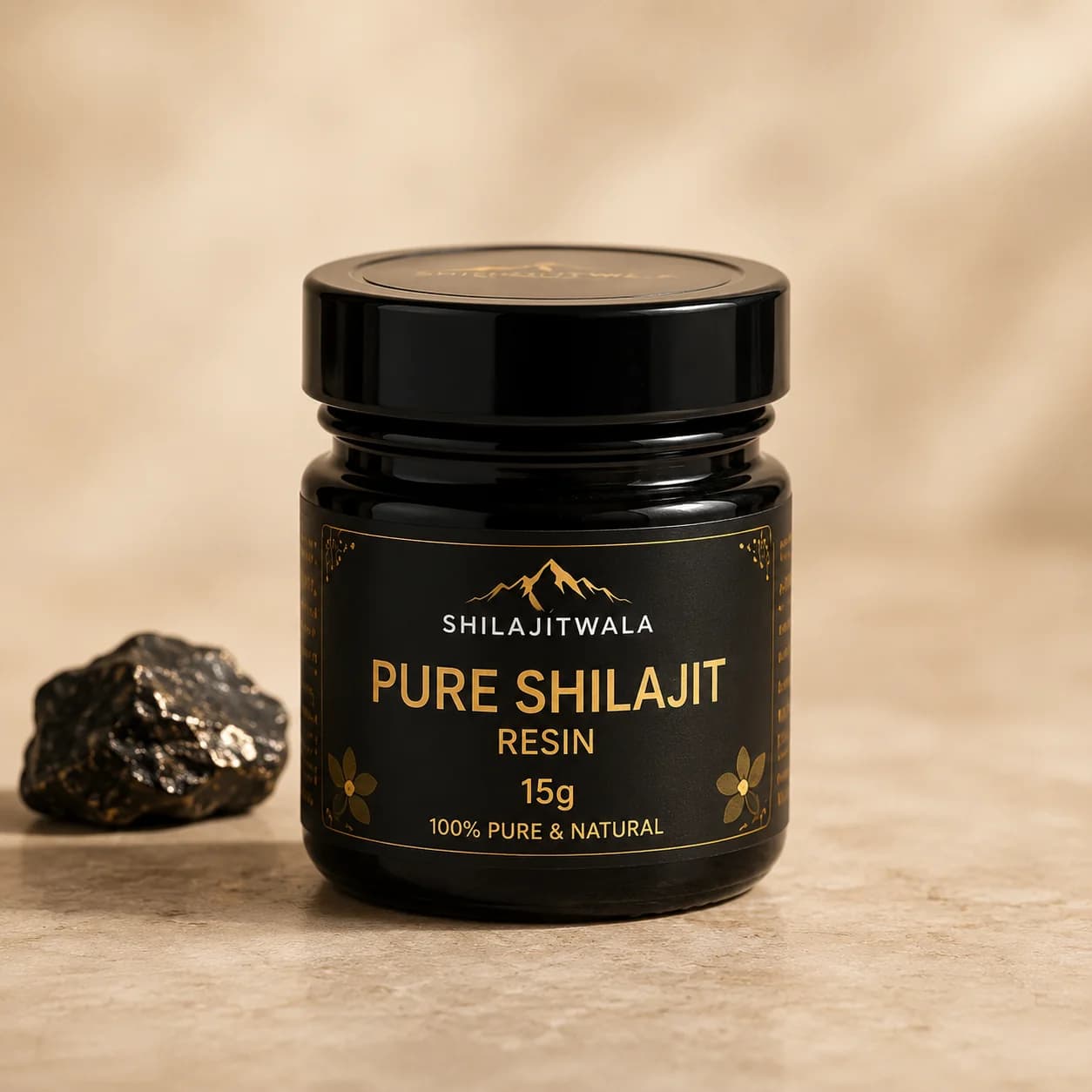
Shilajit resin
Resin is a semi-solid format that changes texture with temperature and usually requires manual measuring. It can make the material visible, but appearance alone does not prove purity.
Check the net weight, serving tool, storage directions and how the labelled amount should be measured.
Shilajit powder
Powder is dry and can be measured by weight, but it may be sold as pure powder, a dried extract or a blend. The label should explain which one it is.
Check for carriers, flavours or other ingredients and compare the actual amount per serving.
Shilajit capsules
Capsules are convenient and provide fixed units, but the capsule shell and any excipients should be disclosed. Capsule count alone does not show how much Shilajit is supplied.
Compare milligrams per capsule, capsules per serving and total ingredient amount in the container.
How to choose between formats
Choose resin if you accept manual measuring, powder if you prefer a dry format and clear gram amounts, or capsules if convenience and fixed units matter most.
In every case, check the lot code, dates, label directions, storage and any testing connected to the exact product.
- Full ingredient list
- Amount per serving
- Total amount in the pack
- Ease of measuring
- Storage requirements
- Price per comparable amount
Compare cost per usable amount, not only pack price
A resin jar, powder pouch and capsule bottle often use different units, which makes headline prices difficult to compare. First identify how much Shilajit-containing material is actually declared in the pack and whether other ingredients are included.
For capsules, check both capsule count and amount per capsule. For resin and powder, compare net grams. A lower pack price can still be more expensive per gram or can represent a blended product rather than the same material.
Convenience is a legitimate quality-of-use factor
The most appropriate format is not necessarily the one that looks most traditional. Capsules can be easier to transport and measure, while resin makes the material visible and can be mixed into a drink. Powder can be easy to blend but may be more exposed to moisture if packaging is poor.
Choose the format you can store and use correctly, then compare identity, ingredients, dose instructions and evidence within that format.
Common questions
Frequently asked questions
Is resin better than capsules?
Not automatically. Resin is more visible, while capsules are more convenient. Compare identity, amount, ingredients and evidence.
Can powder contain added ingredients?
Yes. Read the full ingredient list and confirm whether the product is a powder, extract or blend.
Which format is easiest to measure?
Capsules provide fixed units, and powder can be weighed. Resin often relies on the serving tool and label instructions.
Which Shilajit format is best for travel?
Capsules may be more convenient for some travellers, but the best choice depends on the exact ingredient list, storage requirements and label directions of the products being compared.
How do I compare capsule price with resin price?
Compare the declared amount of Shilajit material rather than only the number of capsules or jar size, and account for other ingredients in blended products.
Evidence and regulation
Sources used for this guide
These sources provide regulatory, safety and quality context. They do not certify a specific product unless the source explicitly identifies it.
- Dietary Supplements: What You Need to KnowNIH Office of Dietary SupplementsConsumer guidance on supplement evidence, quality, interactions and safety.
- Botanical Dietary Supplements: Background InformationNIH Office of Dietary SupplementsOfficial background on botanical identity, standardisation, evidence and quality differences.
- Alternative Medicines and Health Products — Product CategoriesDrug Regulatory Authority of PakistanOfficial description of herbal and health-product categories in Pakistan.