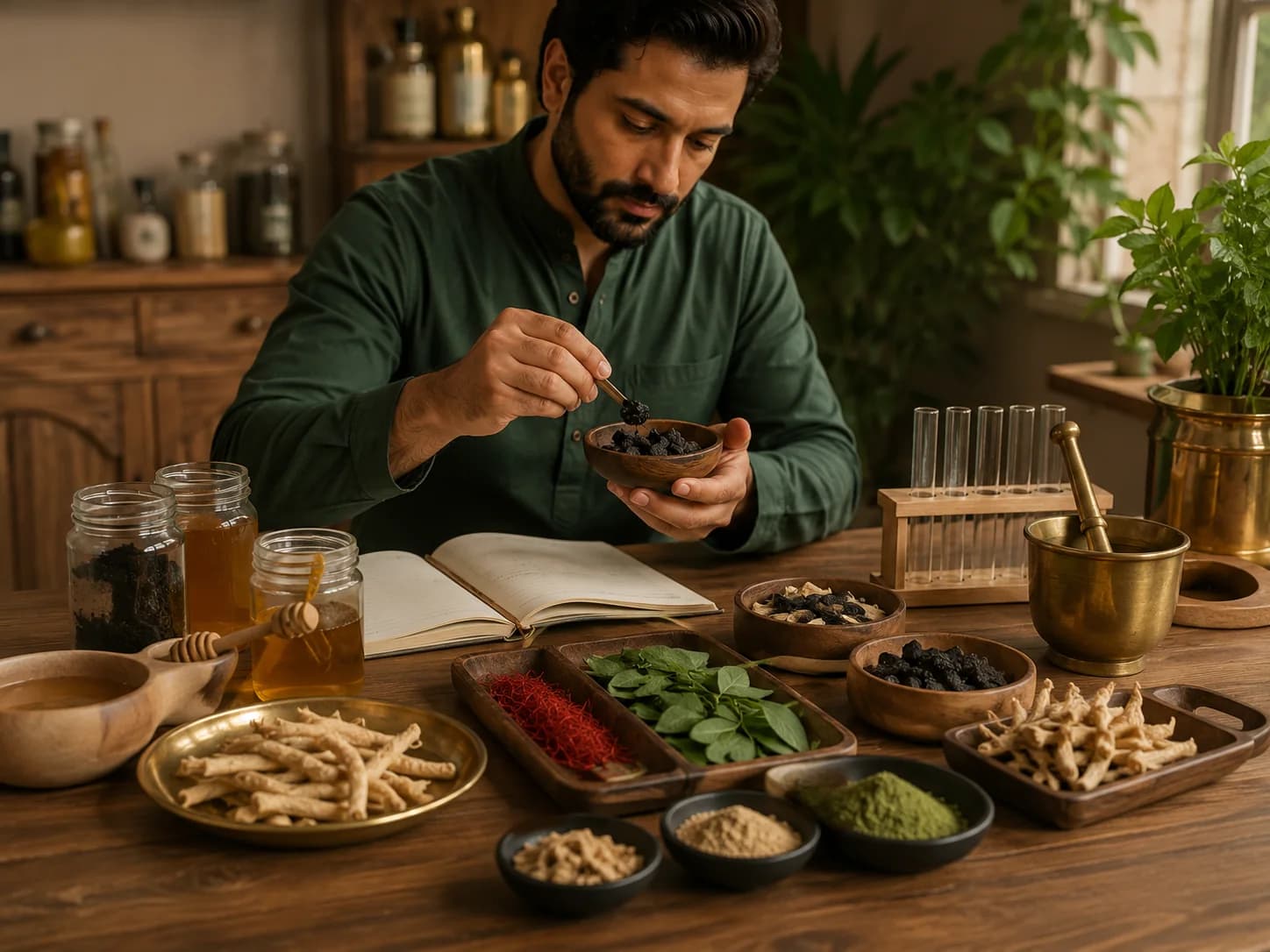
Collection and source handling
Natural material is collected from mountain or rock environments and should be protected from avoidable contamination during handling and transport.
A source-region claim should be specific enough to understand and should not be used as proof of purity by itself.
Cleaning and filtration
Processing may use water, settling, filtration or other methods to separate visible foreign material. The exact process depends on the source and intended format.
A responsible explanation should distinguish cleaning from the later analytical checks used on the finished product.
Concentration and final format
The cleaned material may be concentrated into resin or converted into a dry format. Temperature and handling can affect consistency, so finished-product specifications should define what is acceptable.
Any carrier, capsule shell, flavour or added ingredient should appear on the label.
Quality review and packaging
Before release, the product should be checked against its specification and packed in a suitable container with a secure seal, lot code, dates, directions and storage information.
The most useful evidence is connected to the finished product, not only to an ingredient supplier or an earlier sample.
- Product identity
- Physical condition
- Relevant contaminant checks
- Net weight or fill quantity
- Label and seal review
- Lot and date traceability
A useful process description should name control points
Marketing often compresses the entire process into words such as mountain-sourced, purified and sun-dried. A more informative explanation identifies where contamination or mix-ups could occur and how those risks are controlled.
Useful control points can include source identification, incoming-material inspection, water quality when water is used, filtration, equipment hygiene, concentration conditions, batch coding and final release checks.
- Incoming material identity and condition
- Water or solvent quality where relevant
- Filtration and equipment hygiene
- Concentration and moisture control
- Batch coding and final product checks
Processing should not be used to imply a health benefit
A slower, traditional or low-temperature process can be commercially interesting, but the process description should not be converted automatically into claims of superior medical effectiveness.
Ask what measurable product characteristic the process is intended to control. For safety and quality questions, that is more useful than a romantic description of the manufacturing method.
Common questions
Frequently asked questions
Is Shilajit boiled during processing?
Methods vary. Ask the seller to explain the process used for the exact product rather than relying on a universal claim.
Does processing remove all contaminants?
No process should be assumed to remove everything. Review the finished-product specification and relevant tests.
Why does resin texture vary?
Temperature, moisture, concentration and processing can affect texture. Texture should be assessed with the full product information.
Does sun drying make Shilajit better?
Not automatically. Drying method is one process variable; quality still depends on source material, handling, contamination control, final composition and appropriate testing.
Why should water quality matter during processing?
If water is used to dissolve, wash or filter material, the quality of that water becomes part of the manufacturing control system.
Evidence and regulation
Sources used for this guide
These sources provide regulatory, safety and quality context. They do not certify a specific product unless the source explicitly identifies it.
- Botanical Dietary Supplements: Background InformationNIH Office of Dietary SupplementsOfficial background on botanical identity, standardisation, evidence and quality differences.
- Heavy Metals and Humic Substances in ShilajitPubMedPeer-reviewed review focused on heavy-metal toxicity and quality control.
- Determination of Nutritional and Poisonous Metals in ShilajitPubMedAnalytical study supporting elemental testing in Shilajit quality evaluation.
- Alternative Medicines and Health Products — Product CategoriesDrug Regulatory Authority of PakistanOfficial description of herbal and health-product categories in Pakistan.