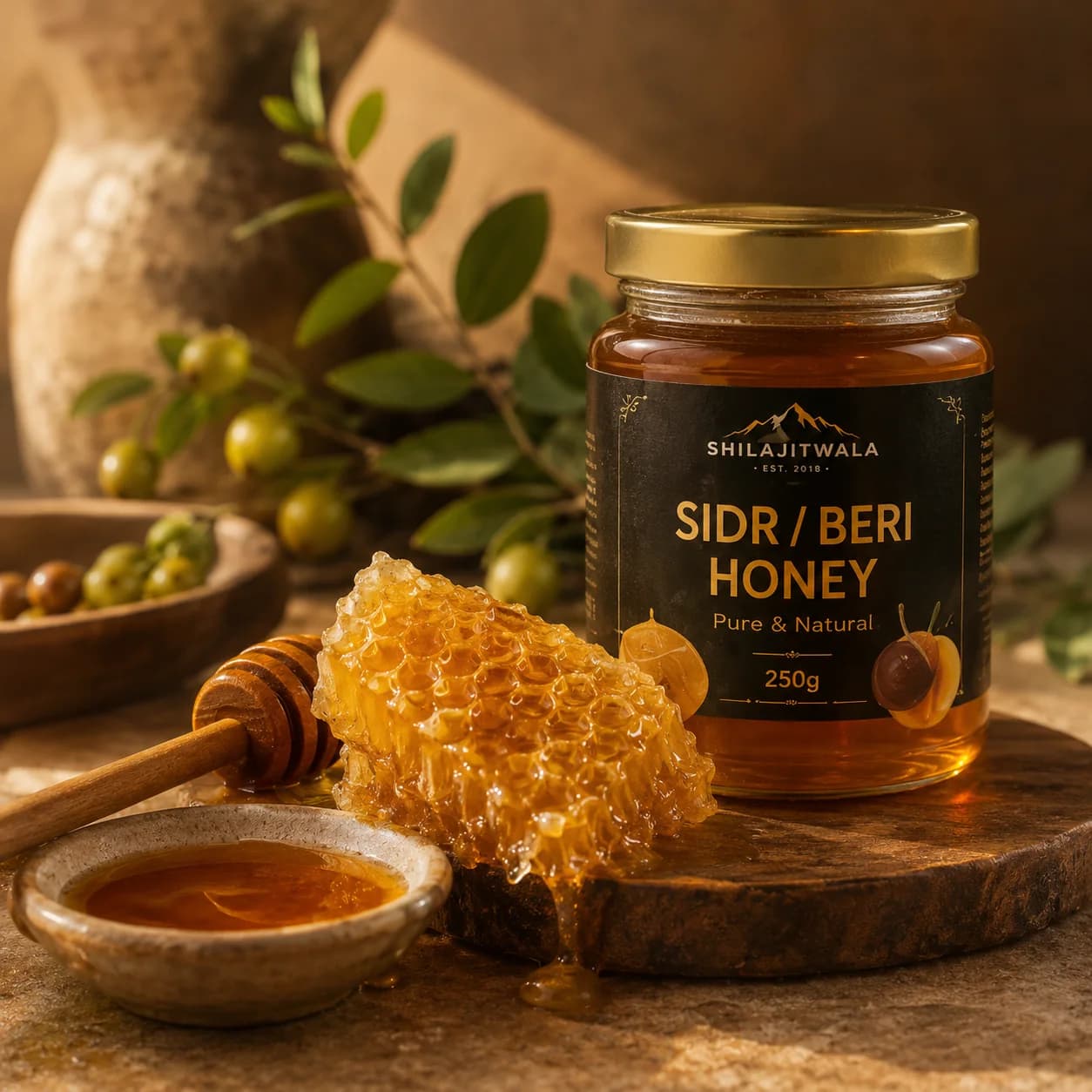
Check the declared source
The seller should state the floral or geographic source they can support. A picture of a tree or landscape is not evidence by itself.
The jar should also show the net weight, lot code, dates and responsible business.
Understand crystallisation
Honey can crystallise naturally depending on sugar composition, moisture, temperature and storage. Crystallisation alone does not prove purity, adulteration or spoilage.
Follow the label for storage and gentle handling rather than using high heat that may change the product.
Ignore unreliable home purity tests
Water, flame, thumb, paper and ant tests cannot establish full honey composition or authenticity. Different genuine honeys can behave differently.
Source records and appropriate analytical methods are more useful when authenticity is disputed.
Use honey safely
Honey should never be given to children younger than 12 months. Keep the jar sealed and use a clean, dry spoon.
People with allergies, blood-sugar concerns or other health circumstances should seek appropriate professional guidance.
Use the label to separate floral claims from geographic claims
A honey can be marketed by floral source, geographic source or both. Sidr/Beri terminology may refer to honey associated with Ziziphus species, but the seller should be clear about what it can actually support for the batch.
A mountain or tree image is not evidence by itself. Useful traceability includes the packer or seller, lot code, dates, net weight and any origin information that can be connected to the jar.
Honey standards focus on composition, hygiene and contaminants
The Codex Standard for Honey provides an international reference for honey composition and labelling and does not allow food additives in honey covered by the standard. It also connects honey safety to broader contaminant and hygiene controls.
For consumers, that means purity cannot be reduced to one home trick. When authenticity is disputed, documented source information and appropriate analytical methods are more meaningful than flame, water or paper tests.
Infant safety needs an unmistakable warning
Honey should not be given to children younger than 12 months because of the risk of infant botulism. This applies even when the honey is marketed as raw, natural, premium or medicinal.
Do not soften this warning with serving-size advice for infants. For older children or adults with specific health concerns, appropriate professional guidance may still be needed.
Common questions
Frequently asked questions
Are Sidr and Beri Honey the same?
The names are often used for honey associated with Ziziphus trees, but the seller should still state the specific source they can support.
Does crystallisation mean honey is fake?
No. Crystallisation can occur naturally and depends on composition, temperature and storage.
Can infants eat honey?
No. Honey should not be given to children younger than 12 months.
Does raw honey mean it is safe for babies?
No. Honey should not be given to children younger than 12 months, regardless of whether it is described as raw, natural or premium.
Does a Sidr label prove the floral source?
No. The label states the seller's claim; traceability, sourcing records and appropriate testing provide stronger support when floral origin is important.
Evidence and regulation
Sources used for this guide
These sources provide regulatory, safety and quality context. They do not certify a specific product unless the source explicitly identifies it.
- Codex Standard for Honey (CXS 12-1981)FAO/WHO Codex AlimentariusInternational composition and labelling standard for honey.
- Foods and Drinks to Avoid or Limit for InfantsU.S. Centers for Disease Control and PreventionOfficial advice not to give honey to children younger than 12 months.
- Alternative Medicines and Health Products — Product CategoriesDrug Regulatory Authority of PakistanOfficial description of herbal and health-product categories in Pakistan.