Start with identity before price
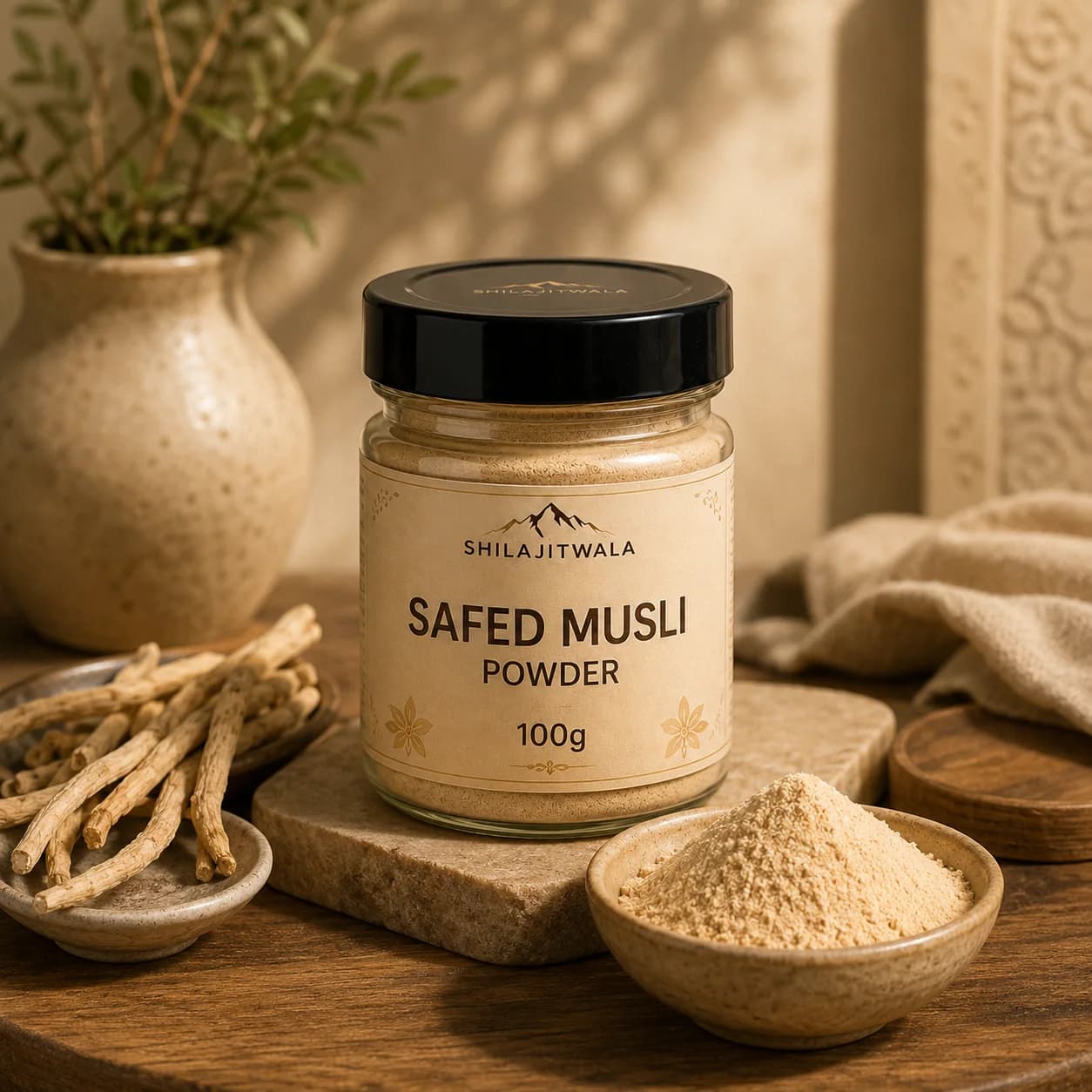
The words Safed Musli can be used loosely in retail listings. The product label should identify the ingredient as clearly as the seller can support, state the plant part and describe whether the jar contains a single powder or a blend.
A pale or off-white powder is not an identity test. Different materials can share similar colour and texture, so the comparison should start with the declaration and traceability rather than appearance.
Compare 100g prices on equal terms
A 50g, 100g and 200g listing cannot be compared from the headline price alone. Convert the price to a common 100g basis, then check whether the ingredient, plant part, powder format and added ingredients are genuinely comparable.
A higher price may reflect sourcing, processing, packaging, testing or seller support, but price itself is not evidence that the powder is correctly identified or more effective.
Read the jar like a buyer, not an advertisement
Look for the net weight, ingredient declaration, lot or batch code, packed/manufactured and best-before information where applicable, responsible business details and storage instructions. Keep screenshots of the listing until the order arrives so the delivered jar can be compared with what was advertised.
If a seller supplies a laboratory document, it should identify the tested sample or batch and state the tests actually performed. A generic certificate should not be treated as proof for every jar.
Separate traditional reputation from medical promises
Safed Musli is frequently marketed around fertility, hormones and sexual performance. Those claims should not replace product identity or appropriate clinical assessment. A seller should not promise a guaranteed outcome from a powder purchase.
Pregnancy, breastfeeding, medicines, allergies and existing health conditions are reasons to seek qualified advice rather than copying a serving amount from another seller or social-media post.
Storage matters for a root powder
Keep the container sealed and dry, away from steam, direct sunlight and high humidity. Use a clean dry spoon or measuring tool and follow the storage wording on the delivered pack.
Unexpected moisture, a broken seal, unreadable dates or an unexplained change in the powder are reasons to stop and ask the seller about the exact batch.
A practical Pakistan buying checklist
Before paying, make sure the listing answers the questions that remain useful after the marketing copy is removed.
- What exact ingredient/botanical identity is declared?
- What plant part and powder format are supplied?
- What is the net weight and price per 100g?
- Are all added ingredients disclosed?
- Are batch/lot and date details readable?
- What storage instructions apply?
- Can any quality document be tied to the delivered batch?
Botanical identity matters because look-alike material exists
Safed Musli is commonly associated with Chlorophytum borivilianum, but a white root powder cannot be identified reliably by colour alone. A review in the scientific literature has also noted adulteration concerns involving closely resembling species.
For a commercial product, ask the supplier to state the botanical identity it is selling and keep that identity consistent across the label, product page and supporting records.
Evidence for commercial safety and quality is still limited
Traditional reputation is often much stronger than the human evidence presented in advertisements. A PubMed-indexed review concluded that substantial scientific evidence was lacking for several claimed uses and that available toxicity, safety and quality studies were inadequate for commercial conclusions.
That is a reason to write cautiously, not a reason to invent benefits. A useful buyer page should focus on identity, ingredients, serving directions, pack information, storage and when professional advice is appropriate.
Common questions
Frequently asked questions
What should I compare when checking Safed Musli price in Pakistan?
Compare the same net weight, ingredient/botanical identity, plant part, powder format, added ingredients, traceability and current price. Price alone does not establish quality.
Can I identify Safed Musli powder by its white colour?
No. Colour and texture can be similar across different powders. Use the label, supplier traceability and relevant product records.
Does an expensive Safed Musli powder guarantee better quality?
No. A higher price should be explained by verifiable product differences such as identity, sourcing, processing, packaging or testing.
Does Safed Musli guarantee fertility or performance results?
No responsible product page should guarantee a fertility, hormone or performance outcome.
How should Safed Musli powder be stored?
Follow the pack directions and generally protect a powder from moisture, heat, direct sunlight and dirty or wet utensils.
Is Chlorophytum borivilianum the botanical name I should look for?
It is the species commonly associated with Safed Musli in the scientific literature, but the seller should state the botanical identity of the exact product being sold.
Why is Safed Musli often adulterated?
High commercial value and similar-looking plant materials can create substitution risk. That is why botanical identity and supplier traceability matter more than powder colour.
Evidence and regulation
Sources used for this guide
These sources provide regulatory, safety and quality context. They do not certify a specific product unless the source explicitly identifies it.
- Botanical Dietary Supplements: Background InformationNIH Office of Dietary SupplementsOfficial background on botanical identity, standardisation, evidence and quality differences.
- Dietary Supplements: What You Need to KnowNIH Office of Dietary SupplementsConsumer guidance on supplement evidence, quality, interactions and safety.
- Safed musli (Chlorophytum borivilianum): a review of its botany, ethnopharmacology and phytochemistryPubMed / Journal of EthnopharmacologyPeer-reviewed review noting adulteration concerns and limitations in the available safety, quality and efficacy evidence for commercial Safed Musli products.
- Alternative Medicines and Health Products — Product CategoriesDrug Regulatory Authority of PakistanOfficial description of herbal and health-product categories in Pakistan.