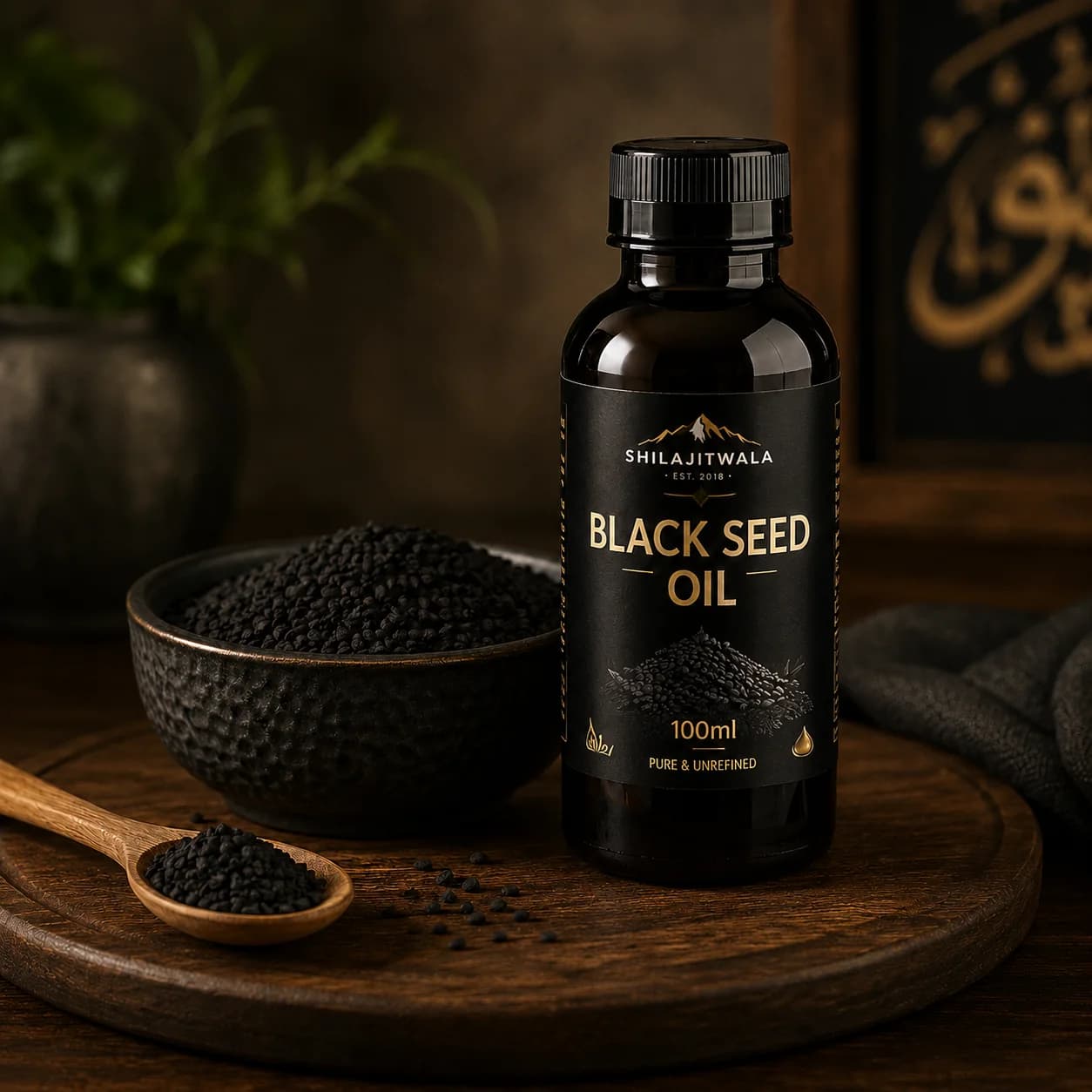
Confirm what is actually in the bottle
The ingredient line should identify Nigella sativa seed oil and disclose carrier oils, flavours, fragrances or other additions. A front label saying Kalonji is not enough when the detailed ingredient declaration says something different.
Check the net volume, batch/lot code, dates and responsible business information so the delivered bottle can be traced back to the listing.
Oral and topical are different product decisions
A cosmetic oil should not be assumed suitable for swallowing. Use the product only for routes explicitly stated on the final label, and do not convert a topical amount into an oral serving.
If the label permits oral use, medicines, pregnancy, breastfeeding, allergies and health conditions can still make individual professional advice important.
What cold pressed does—and does not—tell you
Cold pressed describes an extraction approach, but the phrase does not by itself prove seed identity, freshness, absence of other oils or a medical effect. The useful questions are what seed was used, what else is in the bottle, how it was processed and how the finished oil is protected.
Do not treat bitterness, darkness or a strong smell as a certificate. Sensory properties vary and can change with seed, processing and storage.
Compare bottle price on equal terms
Compare the same volume—such as price per 100ml—alongside the ingredient list and intended use. A smaller bottle can look cheaper while costing more per millilitre.
Packaging also matters: the listing should make the bottle size, closure and storage directions clear before purchase.
Protect the oil from heat, light and excess air
Oils can deteriorate during poor storage. Keep the bottle sealed and follow its light, temperature and refrigeration instructions. Do not automatically refrigerate if the label does not call for it.
A damaged seal, leaking bottle, unreadable date or an unexpectedly rancid/off condition is a reason to stop and contact the seller rather than relying on a home purity test.
A practical bottle checklist
Before ordering, confirm the details that affect what you are actually buying.
- Nigella sativa seed oil identified
- Oral/topical intended use stated
- Complete ingredient list
- Net volume and comparable price per 100ml
- Batch/lot and date information
- Storage instructions
- No disease-cure or guaranteed-result language
Check skin-use warnings separately from oral-use information
Black Seed Oil is sold as both a food/supplement-style product and a cosmetic oil. Those uses have different labelling and safety considerations. A bottle intended only for external use should not be assumed to be suitable for swallowing.
Topical products can also cause skin reactions in some people. If the bottle is intended for skin use, follow its patch-test or warning instructions and stop if a concerning reaction develops.
Nigella sativa identity should be explicit
Kalonji, black seed and black cumin are names used inconsistently in retail markets. The ingredient declaration should identify Nigella sativa when that is the oil being sold.
The label should also make clear whether the bottle contains only that oil or a blend with carrier oils, fragrance or other ingredients. A dark bottle and bitter taste cannot answer that ingredient question.
Common questions
Frequently asked questions
Are Kalonji Oil and Black Seed Oil the same?
They are commonly used retail names for oil sold from Nigella sativa seed, but always verify the ingredient declaration on the exact bottle.
Does cold pressed mean the oil is pure?
No. It is one process description. Ingredient identity, added oils, freshness, handling, packaging and storage still matter.
Can a topical Black Seed Oil be swallowed?
Do not assume so. Use it orally only when oral use is explicitly stated on the final label.
How should Kalonji Oil be stored?
Follow the bottle directions and protect it from inappropriate heat, light and excess air exposure.
Should a dark colour or bitter taste prove quality?
No. Sensory characteristics are not a complete identity or purity test.
Can Black Seed Oil cause a skin reaction?
Yes, skin reactions have been reported with Nigella sativa products. Follow the product's topical-use directions and stop use if a concerning reaction occurs.
What botanical name should I look for on Kalonji Oil?
Nigella sativa is the botanical identity commonly associated with black seed or kalonji oil. Check the exact ingredient declaration on the bottle.
Evidence and regulation
Sources used for this guide
These sources provide regulatory, safety and quality context. They do not certify a specific product unless the source explicitly identifies it.
- Botanical Dietary Supplements: Background InformationNIH Office of Dietary SupplementsOfficial background on botanical identity, standardisation, evidence and quality differences.
- Dietary Supplements: What You Need to KnowNIH Office of Dietary SupplementsConsumer guidance on supplement evidence, quality, interactions and safety.
- Black Seed — safety overviewPubMed / National Library of MedicineClinical reference summarising tolerability and reported adverse effects of Nigella sativa, including allergic contact dermatitis from topical black seed oil.
- Alternative Medicines and Health Products — Product CategoriesDrug Regulatory Authority of PakistanOfficial description of herbal and health-product categories in Pakistan.