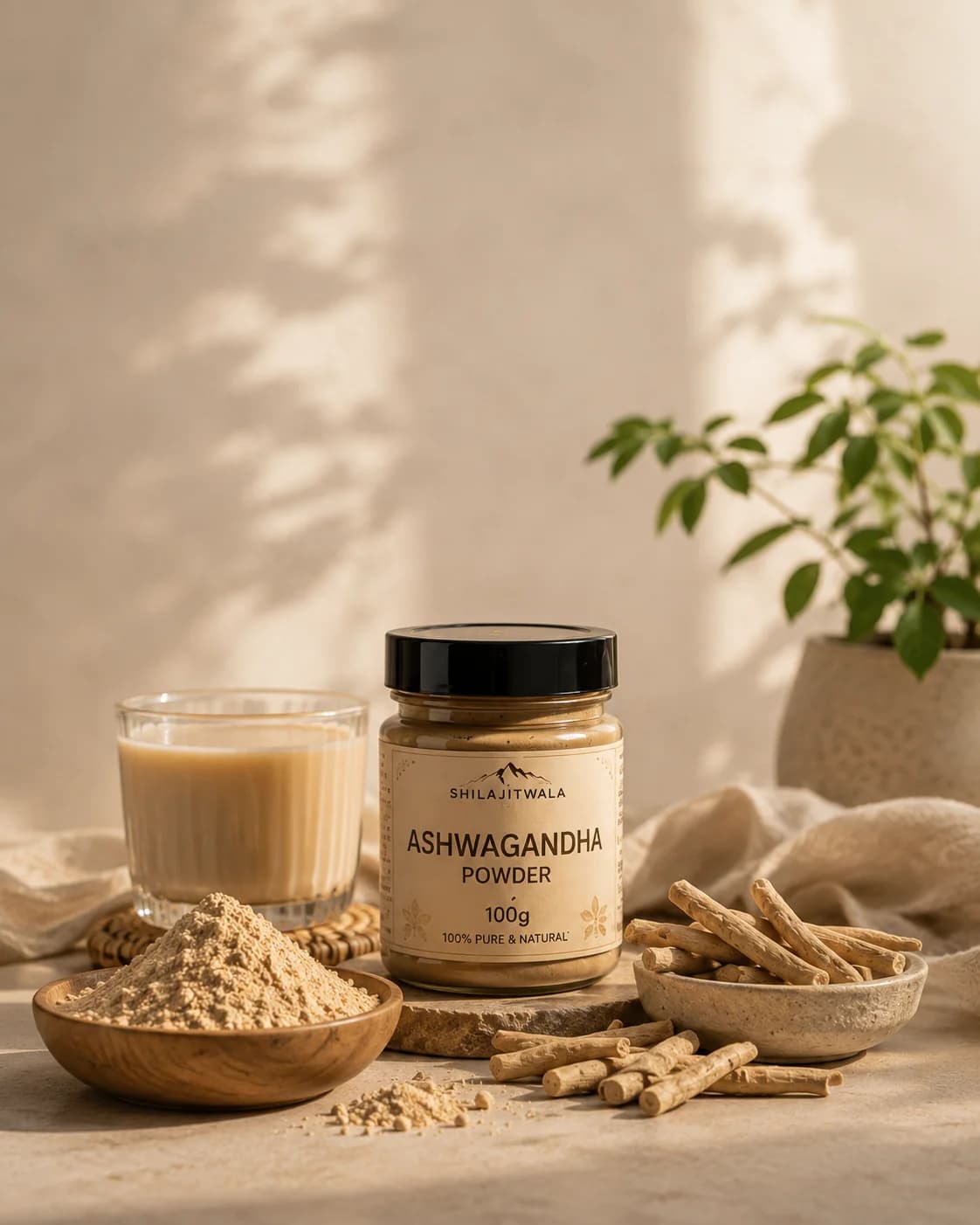
Confirm identity and format
The label should identify Ashwagandha as Withania somnifera and state the plant part where applicable. Root powder, root-and-leaf products and concentrated extracts are different products.
The ingredient list should disclose every carrier, flavour or additional botanical.
- Botanical name
- Plant part
- Powder or extract
- Added ingredients
- Net weight
- Lot code and dates
Compare price using actual amounts
Compare the same format and net weight. A concentrated extract may use a smaller serving than a whole powder, so jar size alone can be misleading.
Check the total ingredient amount, serving count and delivery cost before deciding which product offers better value.
Use and store the powder carefully
Follow the pack directions and do not copy an extract serving amount to a whole powder or vice versa. Use a clean, dry spoon and close the container after use.
Store away from humidity, heat and direct sunlight.
Review safety before use
Ashwagandha may not be suitable during pregnancy and can interact with medicines or certain health conditions. Published reports have also raised concerns about possible liver injury associated with some products.
Ask a qualified healthcare professional when personal risk factors apply and stop use if you develop a concerning reaction.
Powder and extract are different buying decisions
Whole-root powder and concentrated extracts can differ substantially in composition and serving directions. If an extract lists a standardised withanolide percentage, do not compare its serving amount directly with a plain root powder.
For a powder purchase in Pakistan, start with the botanical name, plant part, full ingredient list and net grams. For an extract, also check the extract ratio or standardisation information when supplied.
Safety information deserves the same space as benefit claims
NCCIH reports that some Ashwagandha preparations may cause drowsiness or gastrointestinal symptoms, that rare cases of liver injury have been linked to supplements, and that use should be avoided during pregnancy and breastfeeding. It also lists several medicine and health-condition cautions.
That makes an Ashwagandha page incomplete if it discusses only stress, sleep or energy. A buyer should be able to find the product format, evidence limits, safety warnings and medicine-interaction cautions without opening several unrelated pages.
Compare Pakistan prices by format and net amount
Search results often mix 50g powder, 100g powder, capsules and extracts on the same page. Convert powder prices to a common basis such as price per 100g before comparing.
Do not assume the cheapest product is equivalent to a concentrated extract or that an expensive extract is automatically better. Compare like with like first, then evaluate label quality and evidence.
Common questions
Frequently asked questions
Is Ashwagandha powder the same as extract?
No. Extracts can be concentrated and use different serving directions. Read the exact label.
Which plant part should be used?
Products can use different plant parts. The label should state the plant part clearly so you can compare like with like.
Who should seek advice before use?
People who are pregnant, breastfeeding, taking medicines or managing a health condition should seek qualified advice.
How do I compare Ashwagandha powder prices in Pakistan?
Compare products with the same format and convert different pack sizes to price per 100g. Also check whether the product is whole root powder, root/leaf powder or an extract.
Can Ashwagandha cause an allergic or adverse reaction?
Adverse reactions are possible. NCCIH notes gastrointestinal effects and drowsiness and reports rare liver-injury cases linked to supplements. Stop use and seek appropriate advice for concerning symptoms.
Evidence and regulation
Sources used for this guide
These sources provide regulatory, safety and quality context. They do not certify a specific product unless the source explicitly identifies it.
- Ashwagandha: Usefulness and SafetyNational Center for Complementary and Integrative HealthEvidence and safety overview for ashwagandha.
- Ashwagandha — LiverToxNIH National Library of MedicineClinical reference summarising published reports of liver injury associated with ashwagandha products.
- Botanical Dietary Supplements: Background InformationNIH Office of Dietary SupplementsOfficial background on botanical identity, standardisation, evidence and quality differences.
- Alternative Medicines and Health Products — Product CategoriesDrug Regulatory Authority of PakistanOfficial description of herbal and health-product categories in Pakistan.