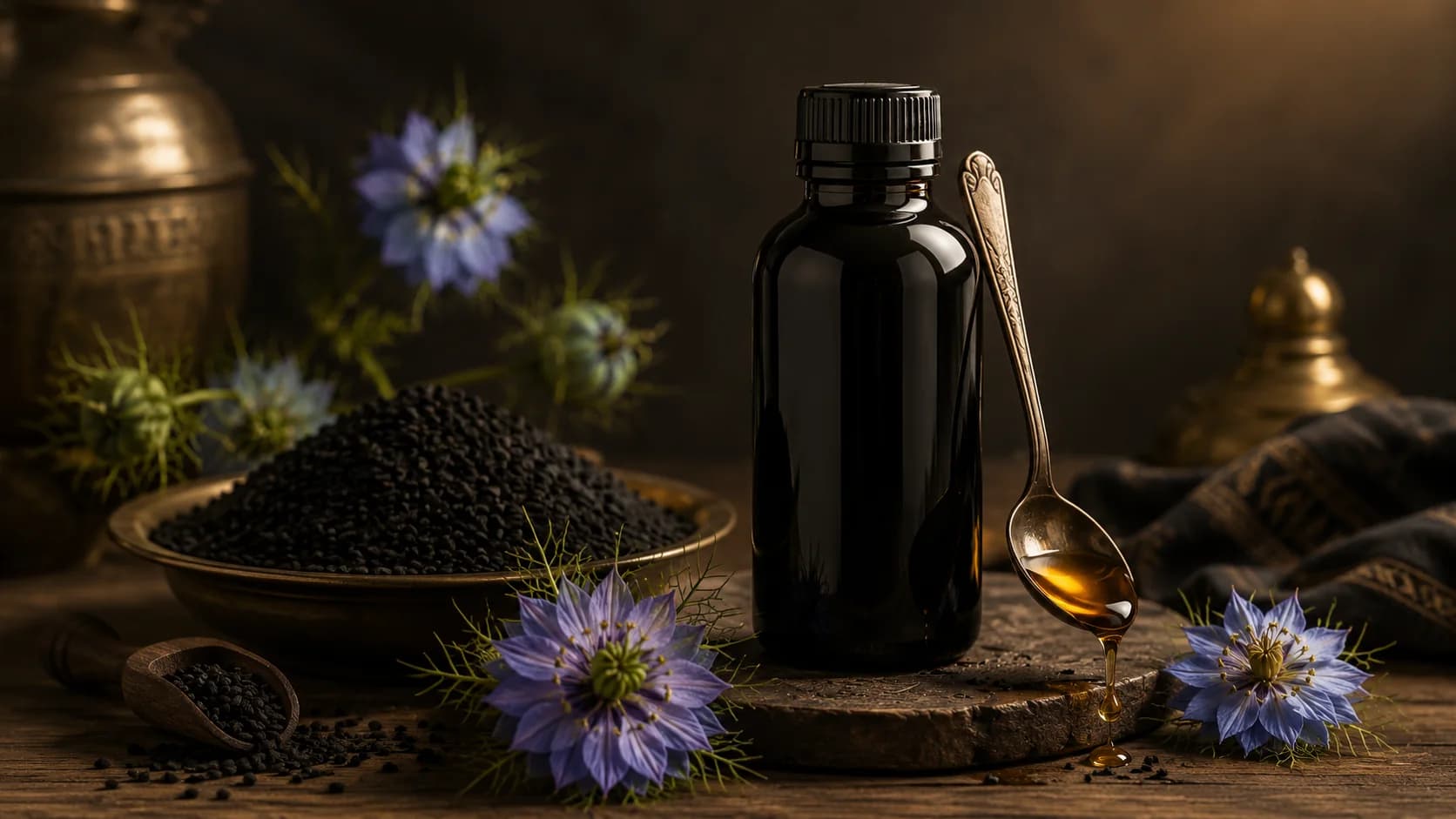
What Cold-pressed Black Seed Oil means
Cold pressing generally refers to mechanical extraction without high-heat refining.
The phrase does not prove freshness, purity or seed quality.
Why exact identity matters
A broad ingredient name does not reveal the plant part, processing method, concentration, batch, pack condition or intended use. For cold pressed black seed oil, connect this point to the exact label, batch and intended use.
Black Seed Oil can differ by seed identity, extraction, filtering, intended oral or topical use, bottle protection and freshness. For cold pressed black seed oil, read the ingredient line, product form, net amount and intended use together. A familiar name can hide meaningful differences in concentration, processing or added ingredients, so the comparison should begin with the exact commercial product rather than the reputation of the ingredient.
Information worth checking
A useful product page should make these details easy to find. For cold pressed black seed oil, connect this point to the exact label, batch and intended use.
Keep the advertised label, batch details and stated quality checks for cold pressed black seed oil until the order arrives. The useful evidence is evidence that can be linked to the delivered pack: matching identifiers, readable dates, an identifiable source and a clear explanation of what each test or document actually covers.
- Pressing method
- Single ingredient
- Batch and filling date
- Protective bottle
- Storage directions
Claims requiring caution
Traditional use, popularity and natural origin do not establish that every commercial product is identical. For cold pressed black seed oil, connect this point to the exact label, batch and intended use.
In a guide about cold pressed black seed oil, a shortcut can feel reassuring because it produces an immediate answer. Yet most quick checks measure only one physical behaviour. They cannot rule out every substitution, contaminant, storage problem or interaction risk, so the result should be treated as an observation—not as a certificate of identity, purity, safety or effectiveness.
- Cold pressed as complete proof
- No date
- Unexplained flavour additives
A practical buying example
The term is useful only when the bottle also identifies the oil, volume and batch.
The cold pressed black seed oil example matters because it shows how a small label or handling detail can change the decision. Resolve the assumption before purchase, ask the seller for the product fact that would confirm it and compare the answer with the delivered pack instead of relying on the headline claim alone.
Questions before purchase
A careful decision should leave fewer unknowns, not merely create a stronger impression. For cold pressed black seed oil, connect this point to the exact label, batch and intended use.
For cold pressed black seed oil, finish by separating commercial questions from personal-health questions. The seller should explain identity, format, batch, storage and intended use; a qualified clinician or pharmacist should assess medicines, pregnancy, breastfeeding, allergies, symptoms or existing conditions. If either side remains unclear, delay purchase or use rather than filling the gap with a promise.
- What method is claimed?
- Was it filtered?
- Does the bottle protect from light?
Common questions
Frequently asked questions
What method is claimed?
Use the exact product label, batch information and the context explained in this guide rather than a universal internet rule.
Can appearance or price answer this alone?
No. Appearance and price may provide context, but neither replaces product identity, documentation and appropriate professional advice.
Where should I begin?
Begin with the delivered pack, ingredient declaration, batch code, use instructions and the seller’s quality information.
Evidence and regulation
Sources used for this guide
These sources provide regulatory, safety or quality context. They do not certify a particular commercial batch unless the source explicitly says so.
- Drug Regulatory Authority of Pakistan — What We DoDrug Regulatory Authority of PakistanOfficial overview of DRAP responsibilities, including nutritional products and food supplements.
- Alternative Medicines and Health Products — Product CategoriesDrug Regulatory Authority of PakistanOfficial description of herbal and health-product categories in Pakistan.
- Dietary Supplements: What You Need to KnowNIH Office of Dietary SupplementsConsumer guidance on supplement evidence, quality, interactions and safety.
- Botanical Dietary Supplements: Background InformationNIH Office of Dietary SupplementsOfficial background on botanical identity, standardisation, evidence and quality differences.
- Information for Consumers on Using Dietary SupplementsU.S. Food and Drug AdministrationGeneral consumer advice about supplement risks and informed decisions.